
Why Your Child Falls Apart: Sensory Overload After School

Updated: 8 hours ago

The teacher says they had a great day.
They participated, followed directions, played at recess, and nothing unusual happened. Then your kiddo gets home and suddenly everything feels harder.
Their sibling is too loud. The snack isn't right. They don't want to talk about school. One small request turns into tears, yelling, or shutting down.
And you're left wondering how the kiddo who was apparently “fine all day” can have such a hard time the moment they get home.
The answer isn't always that something went wrong at school. For some kiddos, sensory overload after school can happen after spending hours managing the noise, transitions, social interactions, and expectations of the school day.
Sometimes, a good day can still be an exhausting day.
School Asks for More Than Academics
Think about everything your kiddo has to process during a typical school day.
They're listening while other kids are talking, moving between activities, following directions, navigating friendships, eating in a busy cafeteria, managing disappointment, waiting their turn, and adjusting when something doesn't go as expected.
For some kiddos, especially those who are sensitive to sensory input or have a harder time with regulation, managing all of this can require a lot of energy.
They may enjoy school. They may love their teacher. They may genuinely have had a great day.
And they may still come home with very little energy left.
“But Their Teacher Says They're Fine”
If the teacher isn't seeing the same behavior, why does everything seem to fall apart at home?
School and home ask different things from your kiddo. At school, there's a schedule to follow, expectations to meet, peers around them, and teachers directing what happens next.
Your kiddo may spend a lot of energy adapting to those expectations. Then they come home to a familiar environment and familiar people, and you may finally see how much effort the day required.
That doesn't necessarily mean they were pretending to be okay at school or choosing to behave differently at home.
Instead of focusing only on the behavior, it can help to ask: What did their day require from them?
What Sensory Overload After School Can Look Like
Sensory or emotional overload doesn't always look like a major meltdown. You might notice:
Crying or becoming upset over small things
Irritability or arguing shortly after getting home
Refusing questions or conversation
Wanting to be alone
Becoming very loud, active, or impulsive
Seeking lots of movement
Becoming more sensitive to noise or touch
Struggling to transition into homework or dinner
Looking completely exhausted
One hard afternoon doesn't automatically mean your kiddo has sensory processing challenges.
But if you're seeing the same pattern repeatedly, it's worth getting curious about what might be contributing to it.
What Sensory Overload After School Can Look Like
Give Them Time to Transition Home
It's natural to want to hear about your kiddo's day as soon as they get home. But after spending hours listening, following directions, navigating transitions, and managing everything happening around them, they may not be ready for more questions or expectations right away.
For some kiddos, the first 30–60 minutes after school can be an important transition period.
Some may need movement after sitting for much of the day. Others may need less noise and conversation.
A familiar snack, time outside, a preferred activity, or simply having some space may help them settle before moving into homework or evening activities.
An after-school routine can be simple:
Home → snack → decompress → reconnect → next activity
Rather than looking for the “perfect” sensory routine, pay attention to what actually helps your kiddo. Their needs may even change depending on the day.
The goal isn't to remove every expectation. It's to give their body and brain a chance to transition before asking them to take on the next part of their day.
Look for Patterns, Not Just Meltdowns
The meltdown is usually what everyone notices. But what happens before it can tell you much more.
Are afternoons harder after PE? When lunch comes home untouched? After assemblies, group projects, or schedule changes? Is going directly from school to another activity particularly difficult?
You don't need to analyze every moment. You're simply looking for patterns that may help explain why certain days are harder.
That information can also be useful to share with your kiddo's teacher or therapy team.
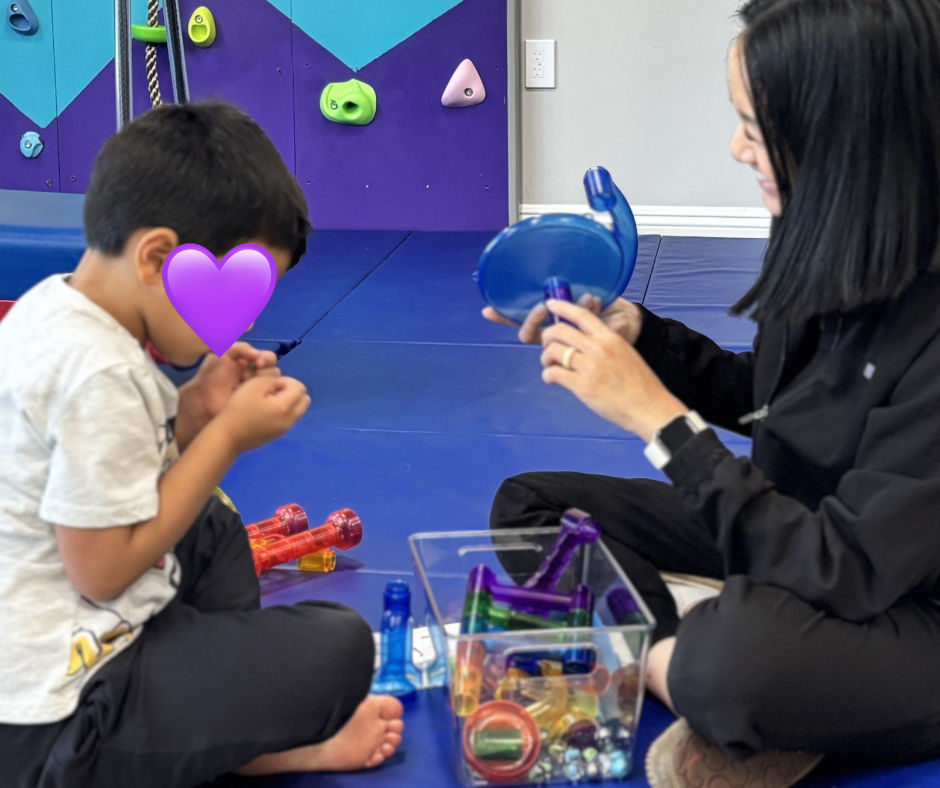
When Might Occupational Therapy Help?
Needing time to unwind after school doesn't automatically mean your kiddo needs occupational therapy.
But if sensory overwhelm, regulation, or difficult transitions are regularly interfering with homework, meals, family routines, activities, or your kiddo's ability to recover from the school day, it may be worth exploring what's happening underneath those moments.
Occupational therapy can look at how sensory processing, regulation, routines, motor skills, and environmental demands may be affecting your kiddo's participation in everyday life.
The goal isn't to eliminate every difficult afternoon or give every child the same sensory strategies. It's to understand your kiddo's individual needs and find support that works for them.
A Great School Day Can Still End in a Hard Afternoon
Your kiddo can enjoy school and still need quiet afterward.
They can have friends and still find the social part exhausting. They can participate all day and have very little capacity left for another direction when they get home.
And their teacher can genuinely say, “They had a great day,” while you genuinely experience a hard afternoon.
Both can be true.
So when afternoons repeatedly feel difficult, instead of asking only, “How do we stop this behavior?”, try asking:
“What is making this part of the day so hard for my kiddo?”
That question can tell you much more about what they actually need.
A Great School Day Can Still End in a Hard Afternoon
Your kiddo can enjoy school and still need quiet afterward.
They can have friends and still find the social part exhausting. They can participate all day and have very little capacity left for another direction when they get home.
And their teacher can genuinely say, “They had a great day,” while you genuinely experience a hard afternoon.
Both can be true.
So when afternoons repeatedly feel difficult, instead of asking only, “How do we stop this behavior?”, try asking:
“What is making this part of the day so hard for my kiddo?”
That question can tell you much more about what they actually need.
If sensory overwhelm, transitions, or regulation are regularly affecting your kiddo's everyday life, the occupational therapy team at Connection Therapy Clinic can help you understand what may be happening and what support could look like for your kiddo.
Research & Resources
Connection Therapy Clinic provides pediatric occupational therapy, speech therapy, parent support, and social connection programs in Laguna Niguel, serving families throughout South Orange County.


Comments